

Over the next six weeks, I’ll be reporting on and riffing on all things World Cup. Sorry to everyone who followed me because of music writing. Double sorry to all of my parents’ friends who followed this when I got sick and wrote about that and are no doubt very confused about what it is I do.
Open wide for some soccer.
We Are Going to Watch the Limits of Rebecca Lowe’s Professionalism Be Tested
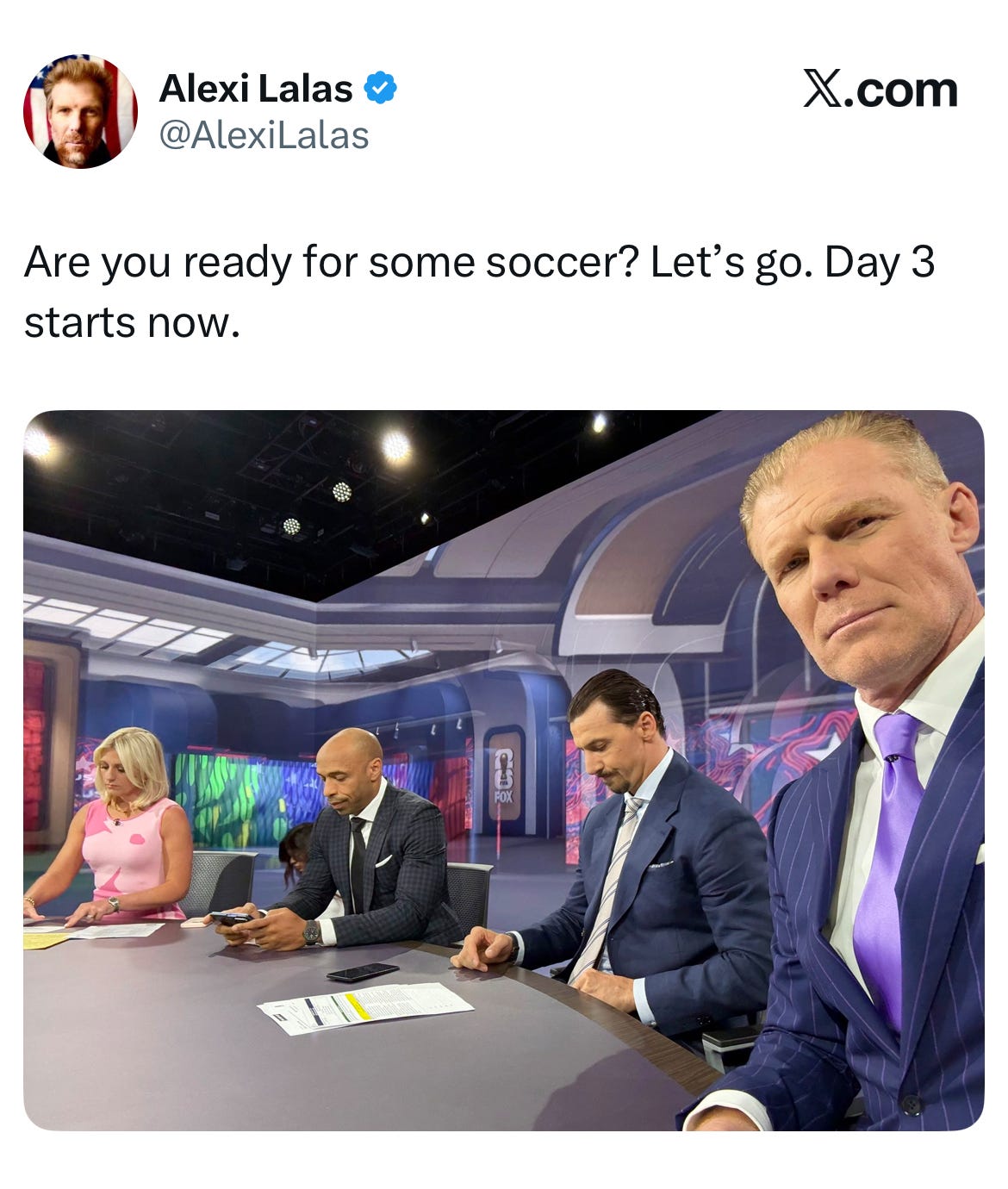
Alexi Lalas is the guy you went to college with who prided himself on being “kind of the asshole of the group,” confident that someone with more social grace within the friend circle would say “He’s a good guy once you get to know him,” but he never grew out of it and by all accounts is not, in fact, a good guy once you get to know him.
Alexi Lalas isn’t even your weird, annoying uncle. He’s your weird, annoying uncle’s weirder and more annoying friend who for some reason is at family gatherings – the reason being that his own family does not want him at their gatherings, or he does not have a family with which to gather due to alienating himself completely from them.
Alexi Lalas is what you get when the media climate favors clicks and engagement at the same level as actual knowledge, insight or nuance.
Rebecca Lowe, on the other hand, is one of the best sports presenters currently on air—period. Knowledgeable, level-headed in her analysis, thoughtful. She is excellent on NBC’s Premier League broadcasts, she’s excellent when she does the Olympics, and she’s excellent in her role alongside Thierry Henry, Zlatan Ibrahimovic and the aforementioned Alexi Lalas.
Do you know how hard it is to make Zlatan look like one of the reasonable ones? Zlatan is Swedish Kenny Powers, but Kenny Powers when he still had the heat in Atlanta.
One time Zlatan told a reporter that only God knew the outcome of an impending match, and the reporter said it would be hard to ask him. Zlatan replied, “You’re talking to him.”
Zlatan speaks about himself in the third person and has played for enough teams that he’s my go-to answer for Immaculate Grid like people start their Wordle with ADIEU.
And Thierry Henry has so much effortless cool and quiet confidence to match one of the greatest careers of all time, he is the polar opposite of an Alexi Lalas character. He has won everything (except a Champions League for Arsenal), he’s played for the biggest clubs in the world (excluding Arsenal) and he’s just really cool, man.
With each “hot take,” with each moment that Alexi Lalas is desperate to pull the spotlight from the topic at hand and onto himself, with each attempt at humor at the expense of whatever rhythm the show had, you can watch the rest of the team shudder. They so clearly hate him. I’d pay so much to hear their calls to their family at the end of the day once they’re back in their hotel rooms. If I got a hold of their private texts my phone would glow like the suitcase from Pulp Fiction. These are not squares they’ve paired up alongside Lalas. Lowe has a podcast with the guy from Ted Lasso who isn’t Ted Lasso, so she clearly has a sense of humor. She is more than ready to laugh with her co-hosts on the Premier League show. Henry is one fourth of the most chaotic broadcast team in the world on the CBS Champions League coverage, too. (Side note, if Bari Weiss gets her hands on that show I will just collapse.)
Lalas has none of the bona fides, none of the charm, none of the professionalism and all of the obnoxious bluster that is, unfortunately, part and parcel to a FOX TV product.
He’s not evil. He’s just a hack. He’s someone who thinks he’s hilarious and is irritating. We’ve all worked with or for someone like this, and maybe that’s why we all find him so especially repugnant, even if you aren’t a dedicated soccer watcher. You can immediately empathize with his coworkers because you know exactly how it feels to be around someone like that. He’s exhausting in a very boring way.
Before the end of this tournament, in the heat of the summer when tensions are high and the days are long, I would give nothing more than for Thierry to call Alexi Lalas some French insult, or Rebecca Lowe to tell him what she no doubt thinks of him on the air. A hot mic moment would have me levitating. Zlatan might even hit him.
Until then, we’ll just have to settle for this picture that looks like a father with his kids who have no interest in speaking to him after this mandatory Father’s Day dinner they got roped into by guilt of knowing he only has a few “good” years left.
Hey, I’ve Seen This One! It’s a Classic
This AirPods commercial with Vini Jr. sure looks familiar.
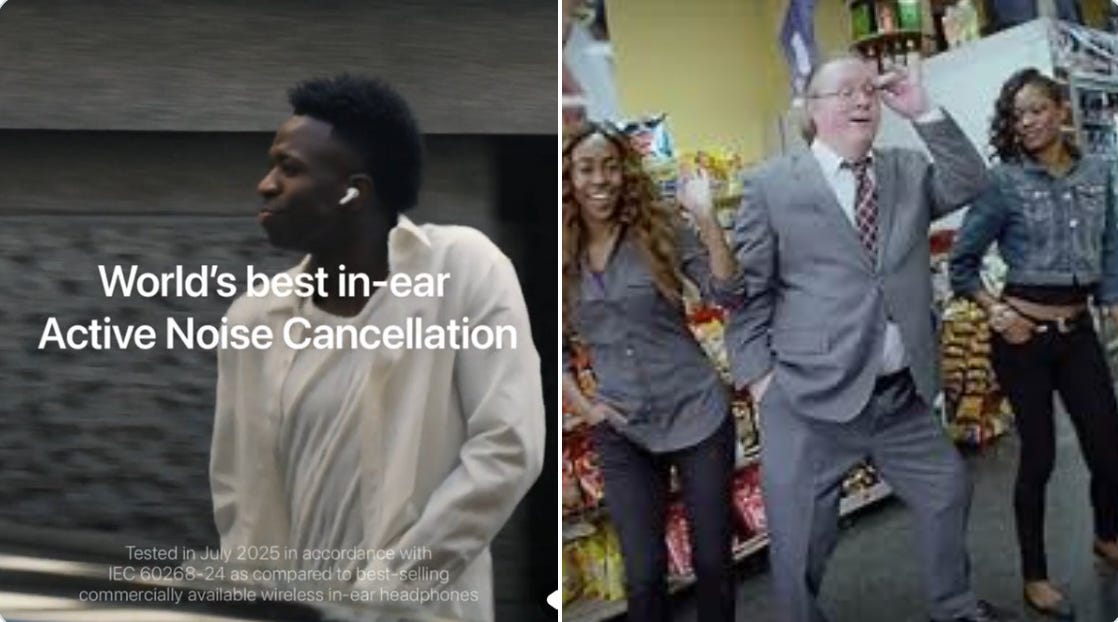
RIP Detroiters.
Matthew McConnaughey Doesn’t Know What Primary Colors Are
We give far too much grace to Matthew McConnaughey. We allow him to play philosopher poet too much. A hackier writer might say something about how we’re sliding toward an Idiocracy-like society where our most celebrated wordsmith is the “All right, all right, all right” dude. True Detective was fine, but it’s not like he wrote it. He wasn’t coming up with the concept of time being a flat circle.
Anyway, Matthew McConnaughey seems to think green is a primary color.


Until he can get his colors locked down, let’s keep him out of the soccer commentary.
Hydration Break!
Soccer is a game of halves, not quarters. For this World Cup, being that every U.S. city is almost unbearably hot in the summer nowadays, they’re allowing hydration breaks in the middle of each half—something that was quite unheard of in a game that was supposed to be free-flowing and consistent. It’s not about the heat, though. FIFA would never be that charitable.
FIFA loves money. The World Cup is a sponsorship opportunity and cash-grab first. Any celebrations of international friendship and transcending borders is incidental and, honestly, frowned upon by the governing bodies both at the state and sporting level. When there’s a hydration break during a game played inside Atlanta’s air-conditioned dome, FIFA is showing its ass a little bit.
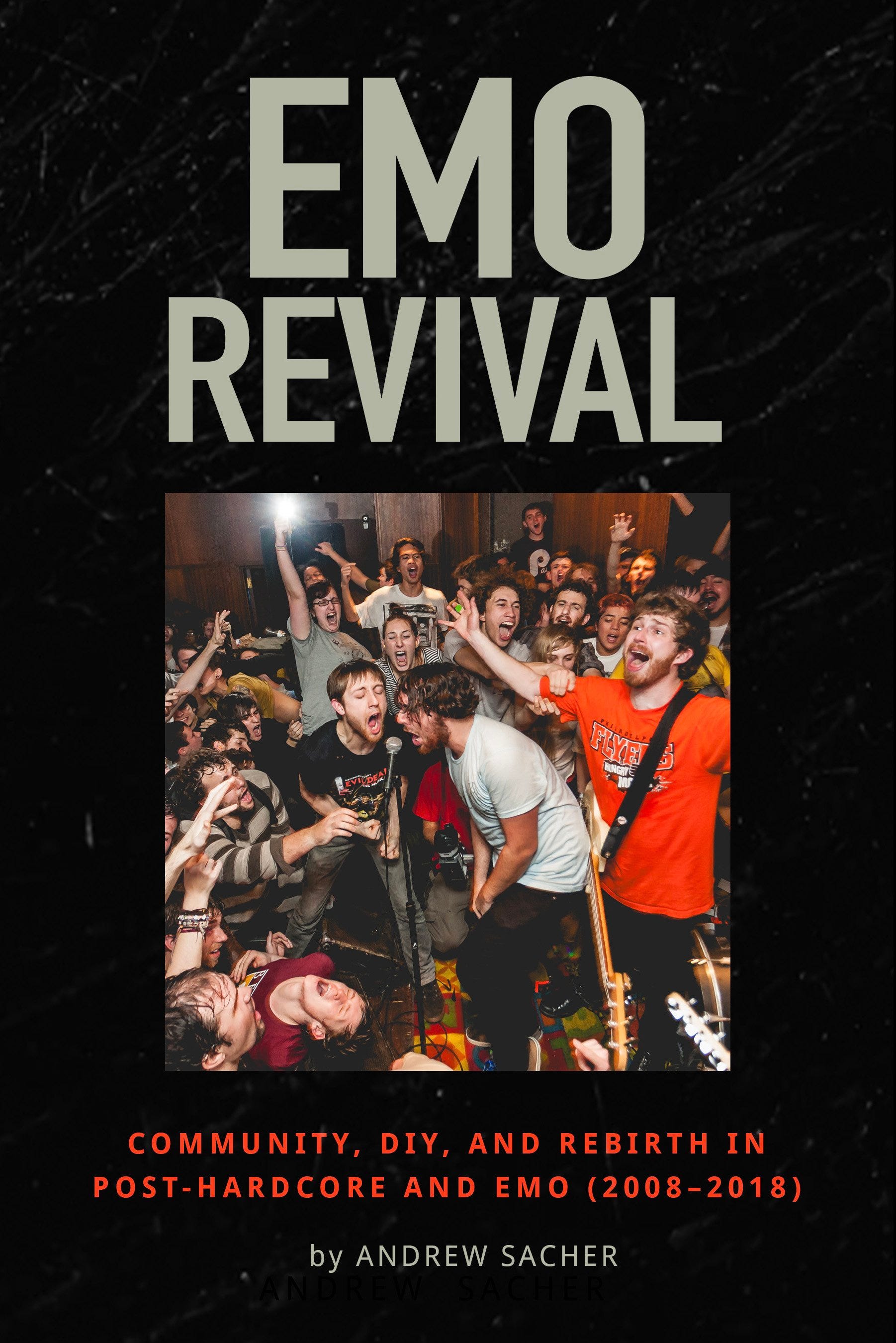
With that, here’s a little breather from the soccer in the form of an interview with Andrew Sacher. Andrew is an editor at Brooklyn Vegan, and he has a book called EMO REVIVAL coming out in September. As you might’ve guessed, it’s about the wave of emo bands that came about over the decade-span of 2008 to 2018. As a guy in a city that was full of much-celebrated bands of this time (the cover is even in Philly), I wanted to talk to Andrew about the book, the era, nostalgia and his own relationship to this music.
What prompted you to write this? What was your relationship to the emo revival, the bands you first got into in this scene, the first ones you kind of took notice of, etc.
I love so many different kinds of music, but “emo revival” kind of ended up becoming my main beat when I became a full-time writer at BrooklynVegan. It’s the one scene/community/movement I can think of that I followed almost from the start and documented the rise of in real time. So, fast forward to 2021, after I interviewed Dan Ozzi about his book SELLOUT, I told him I had been workshopping some book ideas and I asked him if he had any advice for me, and he told me to write about the thing I know more intimately than anything else. Emo revival had to be it.
As for my relationship to it, the emo revival really sparked a revival of my own interest in emo. I got into emo when the third wave was popping off with bands like Thursday, Taking Back Sunday, Saves The Day, Jimmy Eat World, etc., and through that I also found and fell in love with the second wave stuff like American Football, Cap’n Jazz, Braid, Promise Ring, etc. But by the late 2000s, I was really turned off by the direction that most of the mainstream emo scene had gone in, so I kinda checked out from emo and spent most of time diving into other types of music. When I got to college in 2009, a friend showed me Snowing’s Fuck Your Emotional Bullshit EP and I could not believe there was a new band making music that sounded so much like mid ‘90s emo.
Another big one for me was La Dispute’s first album—I had the same kind of reaction, they were making the kind of post-hardcore that I loved and missed at a time when popular “post- hardcore” had become something that I wasn’t interested in at all. Then I found Touché Amoré and saw them play an extremely memorable show for like 100 people. From there I just kept digging and started realizing there were all these likeminded bands who were friends, collaborators, tourmates, labelmates, etc., all doing these versions of emo, post-hardcore, pop punk, and other related styles of music that hearkened back to the way this stuff all felt and sounded before it all got co-opted by the mainstream and lost so much of its original essence. I just thought the whole thing was so exciting.
Where geographically were you at the time? Who were the bands in your area, and where did you kind of see as the epicenters of this wave?
I was at Purchase College in the early days of emo revival and this was absolutely a factor. There was a sizable group of people at Purchase who were all about this stuff, and who booked so many of those bands to come play on our campus. We had Algernon Cadwallader, Snowing, Tigers Jaw, Balance and Composure, The World Is a Beautiful Place and I Am No Longer Afraid to Die, Touché Amoré, My Heart to Joy, Pianos Become the Teeth, and probably plenty of others I’m forgetting come through in their early years. That Topshelf Records band Sirs was a Purchase band, people who went on to play in bands like LVL UP and Sheer Mag had Midwest-style emo bands on campus before they formed the bands they’re best known for. And then after I graduated, I moved to Ridgewood, Queens, and we had that venue Suburbia in Bushwick that was run by the members of this band Living Room, and that was basically the destination for every emo revival band that played NYC (before they got big enough to start playing 500 and 1,000 cap clubs). But NYC was definitely not one of the epicenters of emo revival. The biggest one was Philly and other Pennsylvania suburbs—I would say maybe 80% of the bands in the book are from Pennsylvania—and the second biggest hub was probably Chicago and other surrounding Midwest areas.
Why does this point in time feel like the right time to reflect on this wave? What is in your opinion kind of the state of emo? What does it look like today? Would you consider things happening to be new waves or simply echoes of the previous wave, or maybe just holdouts of the genre and style?
2026 marks the 20th anniversary of the first Algernon Cadwallader demo, so that’s kind of a nice unintended timing milestone. But really I would just say that, after COVID, we started to see a new generation of punk and emo bands coming up, and the “emo revival movement” so to speak seemed like something that happened, that was set in stone, that was in the rearview. Many of the bands my book is about are still active (this year alone, there are very good new albums from Joyce Manor, Tigers Jaw, Basement, Citizen, Turnover and The Menzingers) so it’s not like it’s “over,” but I think the work they did—taking emo back to its DIY roots, building a scene back up from scratch—has been completed in a way. And I think that completed work is what provided a foundation for the current “fifth wave” emo bands. The fourth wave bands had to build their own scene from scratch because there was really no place for them anywhere else, and now the fifth wave is launching off of what the last generation built. I think there’s much less of a divide between fourth and fifth wave emo compared to any two waves of emo that preceded this latest one—most of the fifth wave bands were musically and ideologically influenced by fourth wave bands, and the current scene sometimes feels like a continuation of the previous one—but like every generation does, fifth wave bands have put their own distinct spin on things. There are too many good new emo bands to name (but here’s 10: Home Is Where, Pool Kids, Hot Mulligan, Prince Daddy & the Hyena, Kerosene Heights, Ben Quad, Saturdays At Your Place, Arm’s Length, First Day Back, Combat—and some of those bands are even kinda veterans now!), and it feels like the fifth wave is really having an impact. This might be anecdotal but I’ve actually heard a handful of people say that they missed the fourth wave but got sucked in by the fifth wave, and now they’re going back and falling love with a bunch of fourth wave bands. It also just feels like emo is here to stay, which was not always the case.
These sorts of things are obviously very cyclical. With a lot of younger bands right now channeling early 2000s style and aesthetic, where does that position emo, specifically this wave of emo, for potential “comebacks” or rediscovery by younger fans?
I think emo is extremely ripe for discovery by younger fans. So many of the fans at My Chemical Romance’s stadium shows are clearly too young to have seen them the first time around, and I can’t tell you how many people I’ve run into after Algernon Cadwallader reunited that told me how excited they were to finally see this band they didn’t find until after they broke up. I think whether it’s the When We Were Young-style nostalgia for the third wave, the new fifth wave bands namedropping older emo bands as influences, or older emo songs going viral on TikTok, there are so many gateways for young people to find older emo bands. And a big argument I make in my book is that emo has become its own subculture, just like punk and hardcore before it, and I think “emo” being a thing of interest is a big part of why older bands will keep getting their comebacks. To go back to my own emo origin story, when I realized there were two whole generations of emo bands that predated my generation, I needed to hear all of it.
I assume that still happens in one way or another. Once you realize you like emo, the internet makes it so easy to start figuring out that there are 40 years worth of bands to start diving into.
While this wave of emo was happening, the internet seemed like a much nicer place. This was sort of peak millennial optimism era, where social media too was less of an endless scroll and more of an actual way to meet people, find shows, network if you were in a band, etc., rather than have to play to an algorithm. How do you think the social media landscape of today, and really the regular media landscape of today, changes the way that any of the DIY bands or rock bands without gigantic financial machines behind them - i.e. most of them - operate?
It’s obviously very different, though I think you’d get a better answer if you asked an actual current DIY band how they operate. I don’t want to sound too “back in my day” but it does seem to me like 15 years ago social media could be used to connect different regional scenes, and now social media and the internet is its own scene, especially for bands who came up during the 18 months when live music didn’t exist.
And not to throw stones, because I do versions of this, too, as someone who’s trying to promote a book, but it bums me out that social media algorithms have pressured young DIY bands into trying to create their own viral moments instead of allowing them to use social media as a tool to find other people who love the same niche music that they do.
That all said, my favorite DIY rock scene today is actually the indie-country scene with Wednesday, MJ Lenderman, etc., and the regionality of that scene (the big epicenter in and around Asheville, NC, plus another hub in Vermont with Greg Freeman, Lily Seabird, Florry, etc.) reminds me a lot of the early emo revival days. And not that those bands don’t use social media but it doesn’t seem like it’s the main focus for them. So I kind of think there’s always going to be a version of the thing you’re looking for if you look hard enough.
Does it bug you when every band from this era, especially from the Northeast or West Coast, are referred to as “Midwest Emo”? Because it bugs me.
Haha. Yes and no. If a phrase actually catches on as an easy shorthand to describe a type of music, I’m not really one to fight it, but sometimes it feels a little silly. I get it for bands like Algernon and Snowing because they play Midwest-style emo, but it does kinda bug me when I see it used to kinda just mean “non-mainstream emo.” Like I’ve seen it used for Modern Baseball. They’re a great band but they’re not Midwest emo!
What’s one takeaway you’d like people to take from reading your book, or maybe one theme or idea to focus on when they go into it?
I think the biggest thing for me is, even if you don’t care about emo, I hope you can see that this was a really special moment for music and culture. I think, just on a human level, the story of what the people in this book accomplished is very inspiring. It’s a book about so many incredible albums and powerful live shows, but the music is almost secondary to the community-building aspect, and to how much can happen when enough likeminded people come together because of something they all believe in, no matter how against the grain it might seem at first.
EMO REVIVAL is out 9/8/26. You can pre-order a copy here.
I Got In An Argument Defending Soccer
I played golf on Sunday. When I put my shoes on, I noticed that I had lost a few spikes, and went into the pro shop to price out some new shoes. The Germany vs. Curacao game was on. An older guy looked up at the TV in the top corner.
“You guys aren’t seriously watching soccer are you?” he asked the young-ish guy working the register.
“We’re not really watching anything.”
“Bullshit sport.”
OK, I thought, I’ll bite.
“It’s the best sport there is,” I said.
Without turning to look at me, he complained that it’s only 1-0. I replied that it’s also only the 6th minute or so, and that Germany would surely pile on four or five (they poured on seven). Also, I added, if you don’t count a touchdown as six points, plenty of American football games end 3-2.
“It’s bullshit,” he confirmed. “No one cares about it.”
We argued back and forth, and by that I mean I started saying something about how the American soccer player no longer has a ceiling of going to the University of Virginia and then playing in the MLS and he yelled over me that plenty of schools were good when he was growing up in Philly, but they were only good because the other Catholic schools didn’t have teams, etc. My tee time was coming up, and I had to go to the bathroom, so I ended things by saying, “Well, you’re watching still.”
“I’m not watching!”
“You haven’t looked at me once during this conversation.”
He looked at me then, and grumbled to the guy working the register.
“Are you going to tell this kid to tuck his shirt in or what?”
He’d probably like Alexi Lalas if he gave him a chance. I should have told him that.
I Felt American For Once In My Life
I had a class in college called “American History From 1945.” Temple University’s journalism program mandated that I take “American History Before 1945,” too, but I took this one first because I was a 19-year-old in charge of his own academic schedule.
On the first day of class, I walked into the big lecture hall and took a seat. There was no professor in sight, and the front of the room, the projector was showing Jimi Hendrix’s famous rendition of “The Star Spangled Banner” at Woodstock in 1969. When it was over, a disheveled looking guy walked out. In my memory, he more stumbled out.
“ANY QUESTIONS?”
Over the next minute or two, our professor told us that this wouldn’t be a history class where we’d just memorize names and dates. It was about more than that.
“It’s about what is America? What is an American? How many Americas are there?”
I think about these questions when I’m faced with a dilemma like rooting for the U.S. in a home World Cup when there’s as many dark clouds looming over it. It’s frustrating, to put it simply. Our number 10 is from Central PA. There’s a Philly-area contingent on the team. The manager is Tottenham Hotspur royalty and was the manager when I fell in love with the club. The games are in Philadelphia. It should be perfect, and yet it’s not because the other America had to go and ruin everything.
The one I’m rooting for in this moment is OK. The one I’m rooting for is good, even.
The America I’m rooting for at the World Cup is not the same America that has a UFC fight on the White House lawn. That’s some other country.
When people who don’t watch soccer ask me how the U.S. is, assuming it will be bad, I tell them that we’re actually a pretty good team right now, and not to count them out to at minimum escape the group, at best maybe even make a little run and surprise some people. It’s an exciting team and you should be a little excited about watchin them!
I think about the outrageous scenario of the U.S. actually winning it. It’s far-fetched, but not impossible. Weird game, weird tournament! What would that be like? How much more would I have to compartmentalize patriotism and celebration? Would it qualify as patriotism at all? How conditional would I have to be with it? It’s a funny thing to be quietly hopeful that the team you’re supporting gets kind of far but not so far that they’re accepting the trophy from the current sitting president. Because when that happens, as I’ve seen with other sports teams I like winning their own respective championships, the illusion of multiple Americas, and what it means to be an American, is sort of ruined, because then people show you who they are and what kind of American they were the whole time.
I want them to do well, but not too well. Does that qualify as loser behavior? Is that righteous self-defeatism that apparently only Americans can do?
Mauricio Pochettino, the U.S. manager who has mostly handled this position and the political position it puts him in with some grace, came out in an interview and delivered some hard truths about American sports culture.
In short, we’re soft. We’re losers and we reward losers, despite the complaints from inside the country that we’re all just participation medal merchants now. They asked Poch a pretty simple question: What sort of soccer does America want to play?
Poch replied:
Their culture is playful. They want to play. We told them, “Guys, playing soccer is one thing, competing is another.” They’re two completely different sports. They grow up in a culture of playing. Why? If you start in MLS and you haven’t won a game in three months and you’re at the bottom, what’s the consequence if there’s no promotion or relegation, no international competition? American sports reward losers! But soccer is different: if you reward those who don’t win… If you don’t have goals, you don’t fight. If I lose, what happens? Nothing. They just fire the coach. Also, the American player is disciplined. But with a sense of complacency that isn’t good in soccer. It took us a year and a half to change that mentality.”
This would rile up a certain type of American sports fan. But, thankfully, those American sports fans aren’t reading this news. They don’t know who Mauricio Pochettino is. They’re arguing with me in a golf course pro shop.
Ecuador Cursed Themselves in Philly
The Ivory Coast vs. Ecuador game in Philly might as well have been an Ecuador home game. Those fans can travel, man. I had no idea until my neighborhood was suddenly Ecuador headcuardors. They were a fun vibe to be around, so I’m rooting for them. That said, I wish they had just asked one of us if it was a good idea to put a jersey on the Rocky statue.
Across the host countries, visiting fanbases are being taken in and celebrated as they themselves take in their new surroundings. The Scots in their kilts have charmed the pants off of Boston. They’re chanting at Red Sox games, they’re playing bagpipes. The Korean fans have been welcomed like royalty to Mexico having helped El Tri by beating Germany during the last World Cup. It’s great, man. This is what it’s supposed to be.
Sorry to Ecuador, but it’s important to remember that Rocky didn’t even win the fight. You’re pulling from Philadelphia’s cosmic loser energy. Easy mistake to make.
Congratulations to Cape Verde on the 0-0 Win
Or, as Matthew McConnaughey would call it, Primary Color Island.
I like Spain. They’re my pick to win the whole thing. I adore Pedro Porro. I’ve been to Spain a couple of times and absolutely loved it. Out of principle, I hate when teams set up to not lose a game, as in just sit back and absorb pressure for 90+ minutes in the hopes that they can squeak out a tie. Even worse when that team does that week-in and week-out to win the Premier League. It bums me out to see statistics that show one team peppering shots and maintaining 99% possession only to draw or, at worst, lose on a flukey corner kick or something.
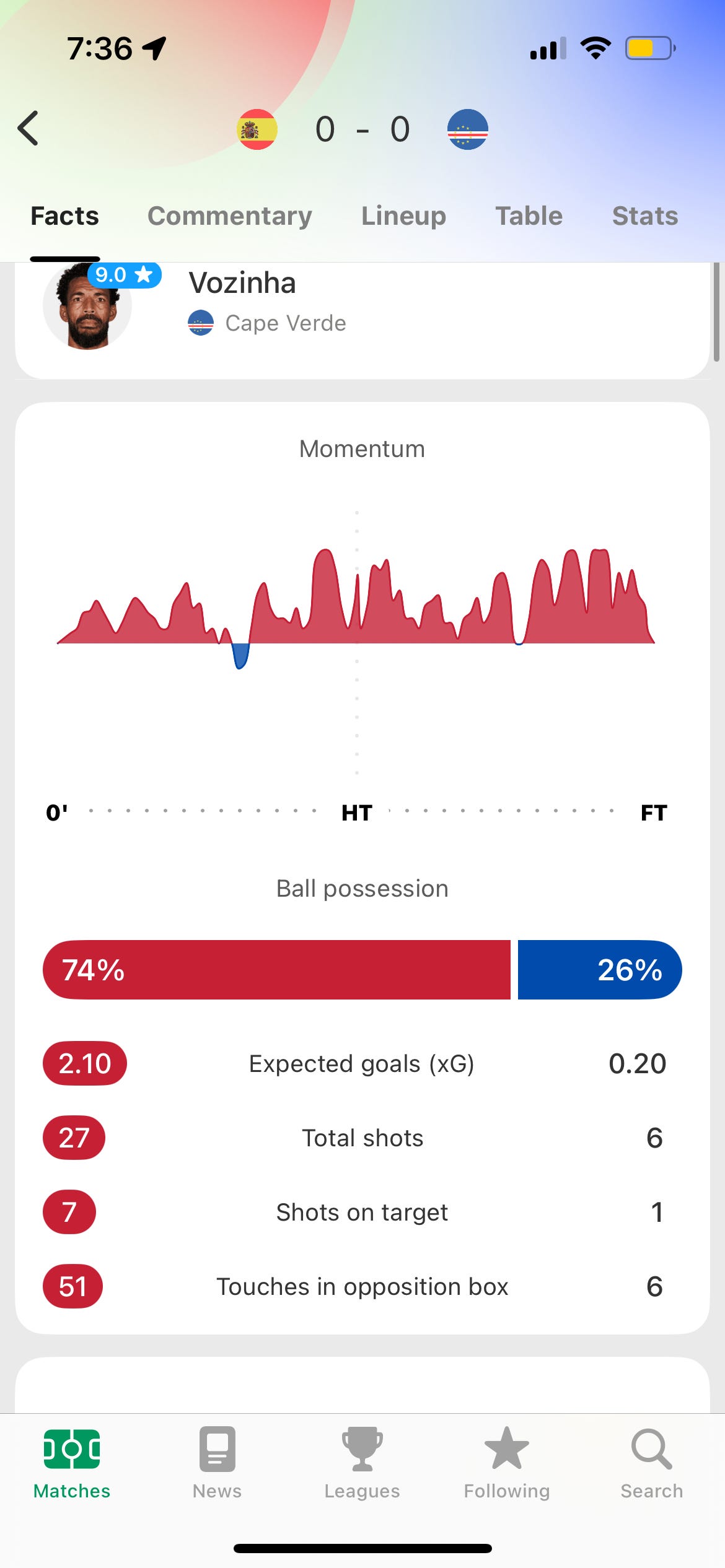
That said, if you can’t appreciate a Cinderella story in the World Cup, well then I don’t know what to tell you. This is the kind of game that could turn someone into a fan, and it was a 0-0 (pronounced nil-nil) draw in the first round of the group stage. A goalkeeper who is 40 (that’s 120 in soccer years) and now has to cancel his usual plans of coaching volleyball to local kids during the summer, and a mysterious mononymous manager with seemingly no history in professional soccer. This game had everything*.
*nothing
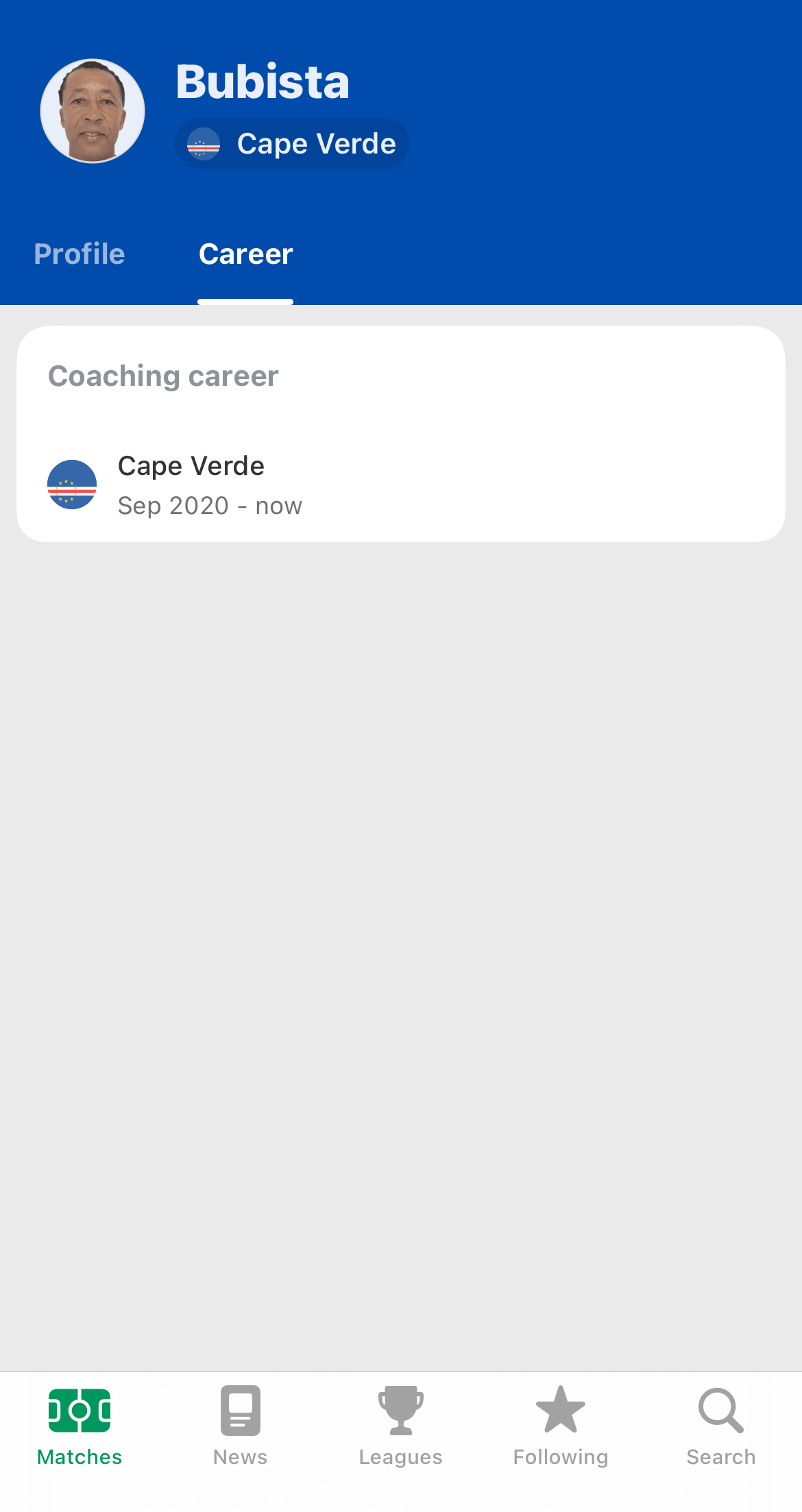
If you can find the excitement and romance and beauty in a game where no one scored, this might just be the game for you. Welcome to the party.
See you next week.
This week’s Snakes and Sparklers musical guest is Keo.